The History of Cape Blanco Lighthouse: Oregon’s Oldest Standing Beacon
 0
0
 0
0
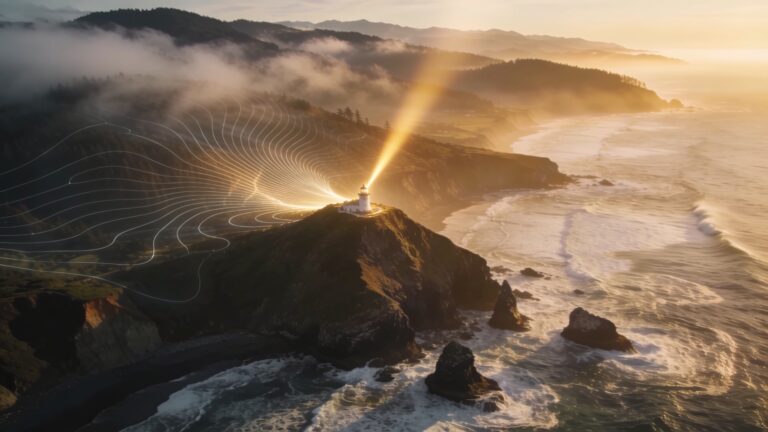
Cape Blanco Lighthouse has earned its place in Oregon history. Perched on a basalt headland 245 feet above the Pacific, it has guided mariners through one of the most treacherous stretches of the West Coast since 1870. If you want to understand the Oregon coast, this lighthouse is a good place to start.
Why Cape Blanco Needed a Lighthouse
The cape itself is the westernmost point in Oregon, which means ships rounding the coastline had to navigate close to a rocky, fog-shrouded headland. The combination of unpredictable currents, dense coastal fog, and hidden offshore reefs made this stretch genuinely deadly for 19th-century sailors.
Gold rush traffic changed everything. After 1848, maritime commerce along the Pacific Coast exploded. Supply ships, passenger vessels, and cargo schooners pushed north and south along the Oregon coast in numbers that earlier decades never saw. The federal government recognized that the cape demanded a light, and Congress appropriated funds to build one.
Construction and First Light
The lighthouse was completed in 1870 after a construction process that tested every supply chain involved. Building materials had to be brought in by sea and then hauled up the steep headland by ox team. The site is remote even today. In 1870, it was genuinely isolated.
The tower itself is built from brick, standing 59 feet tall. Its Fresnel lens, a first-order lens, was the most powerful classification available at the time. The light first illuminated on December 20, 1870, making Cape Blanco the oldest operating lighthouse in Oregon, a title it still holds.
The Fresnel Lens: A Quick Breakdown
The first-order Fresnel lens installed at Cape Blanco represented the peak of 19th-century optical engineering. French physicist Augustin-Jean Fresnel designed the system in the 1820s, and it spread across lighthouse systems worldwide because it concentrated light so efficiently. The lens at Cape Blanco weighed several tons and required a clockwork mechanism, powered by a descending weight system, to keep it rotating at a consistent rate.
Keepers wound the mechanism by hand every few hours. Missing a rotation cycle meant a static light, which could confuse ships expecting a flashing signal. The job demanded discipline.
The Keepers Who Ran It
For the first seven decades of operation, the lighthouse required full-time human keepers living on site. The Cape Blanco Light Station included a keeper’s dwelling, outbuildings, and later a fog signal building. Life at the station was isolated, physically demanding, and important.
Several keepers served long tenures at Cape Blanco. James Langlois held the position for 42 years, from 1875 to 1917, which is one of the longest single-station tenures in Oregon lighthouse history. His consistency of service kept the light burning through Pacific storms that would have stopped less committed men.
Key Facts at a Glance
| Feature | Detail |
|---|---|
| Year completed | 1870 |
| Tower height | 59 feet |
| Elevation above sea level | 245 feet |
| Original lens type | First-order Fresnel |
| Longest-serving keeper | James Langlois, 42 years |
| Location | Westernmost point in Oregon |
| Current operational status | Active aid to navigation |
The Transition to Automation
The U.S. Coast Guard automated Cape Blanco Lighthouse in 1980. Automation eliminated the need for resident keepers, replacing the clockwork Fresnel system with modern electric optics. The original first-order Fresnel lens was removed and is now on display at the Coos County Historical Society Museum in North Bend, Oregon. Worth seeing in person if you get the chance.
Automation preserved the light’s function while drastically reducing operating costs. The downside is that the keeper’s dwelling sat vacant and deteriorated for years before preservation efforts picked up momentum.
Preservation and Public Access
The Oregon Parks and Recreation Department took over management of the surrounding land as part of Cape Blanco State Park. Through cooperation between the state and the U.S. Coast Guard, the lighthouse opened to the public for guided tours. The keeper’s house was restored and now operates as the Hughes House, a separate historic site on the park grounds.
The preservation effort at Cape Blanco is a good example of what happens when state agencies and volunteer groups coordinate well. The Friends of Cape Blanco organization has contributed significantly to maintaining both the lighthouse and the Hughes House for public access.
What Makes Cape Blanco Historically Significant
A few lighthouses in the Pacific Northwest get more attention. Cape Blanco deserves more credit than it typically receives. Consider what distinguishes it:
- It is the oldest standing lighthouse in Oregon, operational since 1870.
- It sits at the westernmost point of Oregon, making its navigational role more geographically significant than many coastal lights.
- Its 245-foot elevation gives it one of the highest focal plane heights of any lighthouse on the Oregon coast.
- Its record of continuous operation through major Pacific storms is a testament to the quality of its original construction.
- The 42-year tenure of keeper James Langlois represents an extraordinary human record within Oregon lighthouse history.
The lighthouse has weathered earthquakes, brutal Pacific storms, and the disruptive shift from whale oil to kerosene to electric power. Its brick construction has proved more durable than the wooden structures that came and went elsewhere on the coast.
Key Takeaways
Cape Blanco Lighthouse is the oldest operating lighthouse in Oregon, first lit on December 20, 1870. Its brick tower stands 59 feet tall on a headland 245 feet above the Pacific. A first-order Fresnel lens provided its original signal, and the station required dedicated human keepers until automation in 1980. Keeper James Langlois served for 42 years, a record worth remembering. The lighthouse remains an active aid to navigation and is open to the public through Cape Blanco State Park.
If you plan a visit, check current tour schedules through Oregon State Parks before you go. The Hughes House on the same grounds adds worthwhile context about 19th-century life on this remote headland. Come for the history, stay for the view of the Pacific from one of the highest lighthouse sites on the Oregon coast.