What Is There to Do in Cape Blanco State Park
 0
0
 0
0
Cape Blanco State Park sits on the Oregon Coast at the westernmost point in Oregon, a windswept headland that juts into the Pacific with a kind of quiet authority. People drive hours to get here, and the reward is a place that packs lighthouse history, coastal hiking, equestrian trails, and some of the best shoreline access on the entire coast into one compact package. If you want to know what actually fills a day here, here is the honest rundown.
Tour the Cape Blanco Lighthouse
The lighthouse is the centerpiece of any visit. Built in 1870, it is the oldest lighthouse in Oregon still in operation, and it holds the record as the westernmost lighthouse in the contiguous United States. Climbing the 59 steps to the top earns you a view that stretches up and down the coast on clear days, with the Siskiyou Mountains visible to the east.
Tours run from April through October. A small fee covers the guided climb, which is absolutely worth doing. The lighthouse keepers who lived here for decades operated in brutal coastal weather, and the guides do a solid job of putting that history into human terms. Go early in the morning before the wind really picks up.
Visit the Hughes House
About a quarter mile from the lighthouse stands the Hughes House, a Victorian farmhouse built in 1898 for rancher Patrick Hughes and his family. The Oregon Parks and Recreation Department has restored it carefully, and the interior reflects life on the southern Oregon coast at the turn of the last century.
This stop takes 30 to 45 minutes and works well paired with the lighthouse tour. Children find the period furniture and tools interesting, and adults tend to appreciate the agricultural history that shaped this stretch of coastline long before it became a state park.
Hike the Coastal and Forest Trails
Cape Blanco has a trail network that rewards both casual walkers and people who want a proper workout. The park sits above the Sixes River estuary, which creates a mix of terrain that you rarely get in a single location.
Key trails to know:
- The North and South Rim Trails run along the bluff edge and deliver constant ocean views with minimal elevation change.
- The trail down to the beach drops from the headland to a wide black sand and cobble shoreline that stays relatively uncrowded.
- A loop combining the rim trails and the beach access trail covers roughly 4 miles with manageable terrain.
- The Sixes River Trail runs along the river through Sitka spruce and red alder, offering a sheltered alternative when the headland wind is fierce.
The beach itself is worth time on its own. Agates and jasper wash up regularly, and the rocky outcrops at the base of the headland hold tidal pools at low tide. Bring a tide chart and plan accordingly.
Horseback Riding
Cape Blanco is one of the few Oregon State Parks with dedicated equestrian facilities. There is a horse camp with corrals, and equestrian trails connect through the forested sections of the park. If you trailer horses, this spot is a legitimate destination rather than an afterthought. Riders get access to terrain that hikers see, plus additional forest routes closed to foot traffic.
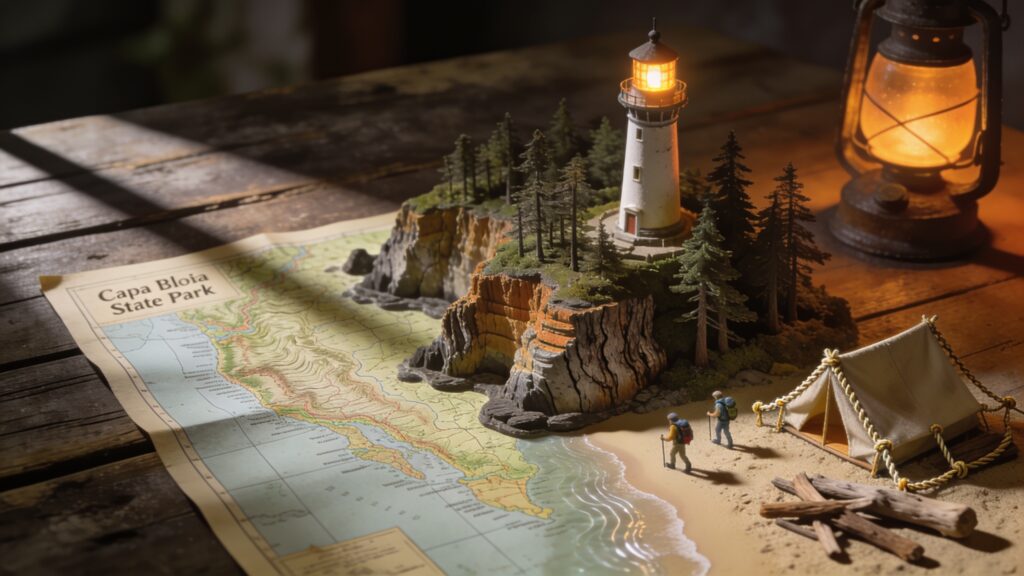
Camping
The campground at Cape Blanco has a mix of full-hookup RV sites, tent sites, and the horse camp mentioned above. The location, high on the headland, puts campers in the wind line, so a four-season tent and good stakes matter here even in summer.
| Campsite Type | Hookups | Best For |
|---|---|---|
| Full-hookup RV sites | Water, electric, sewer | RV campers wanting convenience |
| Tent sites | None | Backpackers and car campers |
| Horse camp | Water access, corrals | Equestrian visitors |
| Hiker/Biker sites | None | Cyclists on the Oregon Coast Bike Route |
Reservations through Oregon’s state park system open months in advance and fill quickly for summer weekends. Book early or plan a midweek visit.
Wildlife Watching
The park sits along the Pacific Flyway, making spring and fall migration seasons productive for birders. Black oystercatchers work the rocks below the lighthouse year-round. Peregrine falcons hunt the bluff edge. Harbor seals and California sea lions haul out on the offshore rocks, and gray whales pass close to the headland during their December to January southbound migration and their March to April northbound return.
A pair of binoculars and a calm morning put you in the right position for any of this. The overlooks near the lighthouse are the best vantage points for whale watching.
Day Trip Logistics
Cape Blanco sits about 9 miles north of Port Orford on Highway 101. The park road runs west from the highway for roughly 5 miles to the lighthouse and day-use areas. A few practical notes worth knowing before you arrive:
- The park charges a day-use fee, payable at the entrance.
- Wind speeds regularly exceed 30 mph on the headland, so a windproof layer belongs in your bag every month of the year.
- Cell service is limited inside the park, so download maps and tide charts before you leave town.
- The nearest fuel and groceries are in Port Orford, a quick drive south.
Key Takeaways
Cape Blanco rewards visitors who show up with a plan. Tour the lighthouse first while your legs are fresh, loop through the Hughes House, then take the bluff trails to the beach for agate hunting and tide pool time. Birders and whale watchers should build their visit around early mornings and favorable tides.
If you have the option, camp here for a night or two. The sunsets from the headland are the kind that make you remember exactly why you drove all this way. Make your reservations early, pack for wind, and give yourself a full day. Cape Blanco earns it.