Why Is It Called Cape Blanco?
 0
0
 0
0
Cape Blanco sits at the southwestern edge of Oregon, jutting into the Pacific with a quiet authority that makes you stop and think about the people who named it. That name, “Blanco,” has been attached to this headland for over four centuries. The story behind it touches Spanish exploration, the practical habits of early navigators, and the physical character of the cape itself. Once you understand the name, you see the place differently.
The Spanish Connection
“Blanco” is Spanish for “white.” The name Cape Blanco translates directly to “White Cape.” That alone tells you the people who named it were Spanish, and they named it for something they could see from a ship.
Spanish navigators worked the Pacific coast of North America from the mid-1500s onward, charting coastlines and claiming territory for the Spanish Crown. The voyage of Martin de Aguilar in 1603 is the most commonly cited origin of this specific name. Aguilar, sailing under the broader expedition led by Sebastian Vizcaino, pushed further north along the Oregon coast than most of his contemporaries. He is generally credited with identifying and naming Cape Blanco.
The exact record is patchy, as it tends to be with early colonial-era exploration documents. But Spanish charts from the early 1600s show “Cabo Blanco” in this region, and that places the naming squarely in the era of Aguilar’s voyage.
What Made It “White”?
This is the part that matters most. Navigators named capes and headlands for what they looked like from the sea, because those names had to be functional. A sailor approaching an unfamiliar coast needed names that matched visual landmarks.
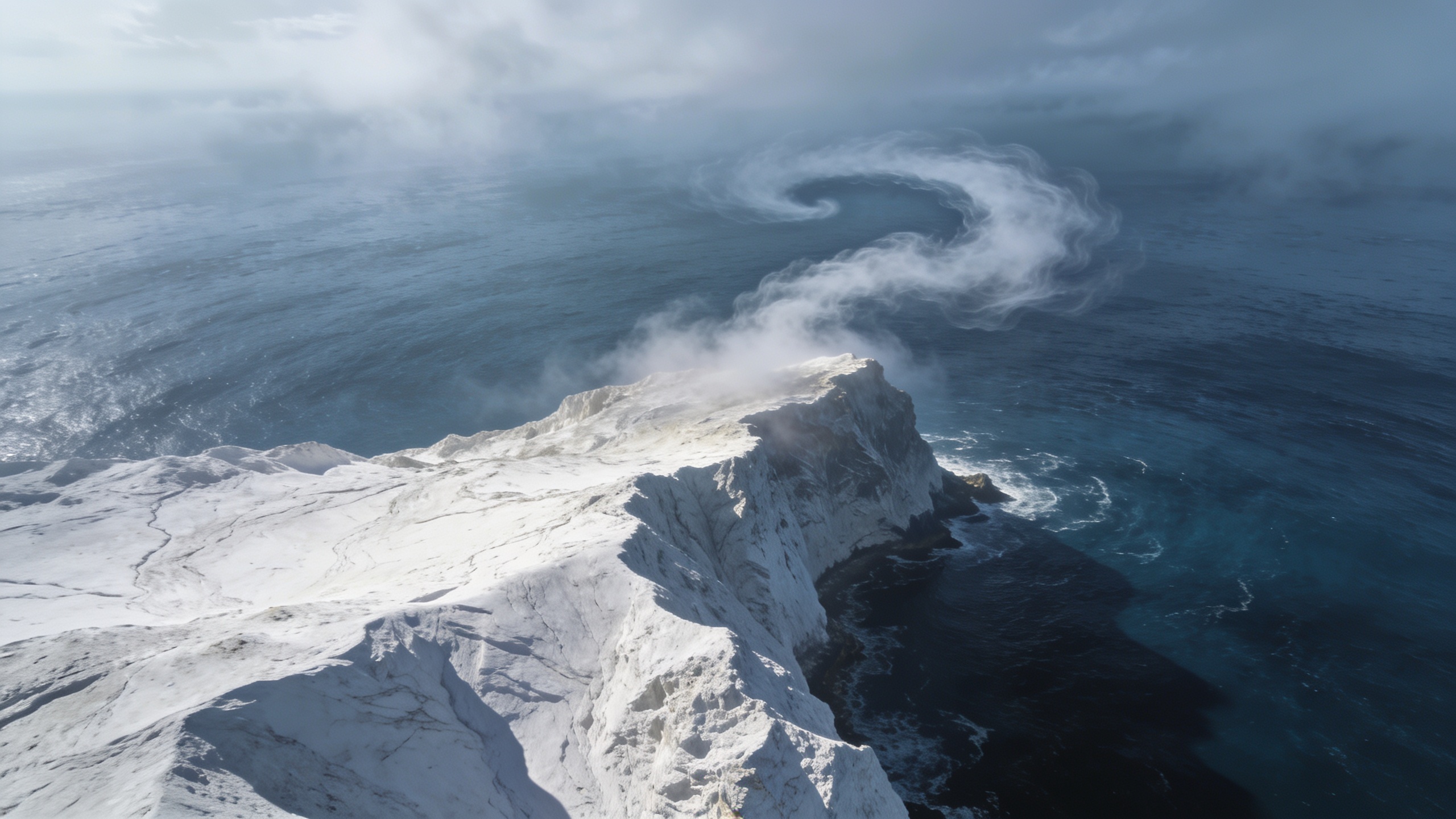
Cape Blanco fits the description. The headland has whitish-gray sedimentary rock faces, and the light-colored cliffs were visible and distinctive from offshore. The white to pale buff coloration of the exposed rock faces made this particular point stand out along a coastline that is otherwise heavily forested and darker in tone.
There is also a secondary possibility. Fog, which is a defining feature of the Oregon coast, sometimes gave headlands a bleached, white appearance when viewed from a distance. Spanish navigators applied the name “Blanco” to multiple points along the Pacific coast where white rock, foam, or fog made a cape visually pale. Cape Blanco in Oregon is one of several capes with this name in the Americas.
Other Capes Called Blanco
The name was applied more than once. Spanish explorers used it as a descriptive term across the hemisphere wherever a white or pale headland appeared.
| Location | Country | Notes |
|---|---|---|
| Cape Blanco, Oregon | United States | Westernmost point in Oregon, named circa 1603 |
| Cabo Blanco | Costa Rica | Southernmost point of the Nicoya Peninsula |
| Cabo Blanco | Peru | Near Talara, historically significant for fishing |
| Cabo Blanco | Argentina | On the Patagonian coast |
| Cape Blanc | Tunisia | North African headland, French variant spelling |
The pattern is consistent. Each of these places has pale rock, white sand, or foam-battered cliffs that earned the label. The name was a description, applied fresh each time, by navigators who never compared notes across oceans.
Why Oregon’s Cape Blanco Kept the Name
Many place names from early Spanish exploration were replaced by English names as British and American influence expanded. The Oregon coast went through that process throughout the 18th and 19th centuries. Cape Blanco is one of the few Spanish names that survived intact.
There are a few reasons this happened.
- The name was already on enough European charts by the time British explorers arrived that replacing it created confusion.
- George Vancouver’s 1792 coastal survey, which renamed many Oregon landmarks, left Cape Blanco in place, likely because it was already well-established in maritime records.
- The physical description remained accurate. A name that describes what you can actually see tends to stick better than an arbitrary honorific.
- Cape Blanco’s geographic importance, as the westernmost point in Oregon, meant it appeared on maps frequently, which reinforced the name through repetition.
By the time Oregon became a U.S. territory in 1848, Cape Blanco was fixed in the record and nobody had a compelling reason to change it.
The Cape Today
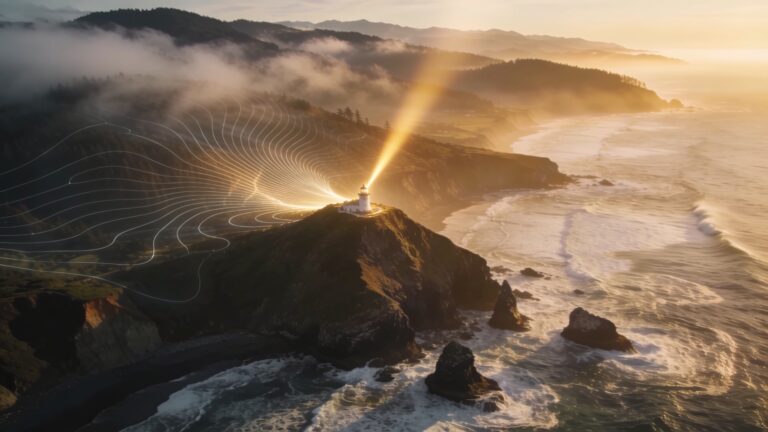
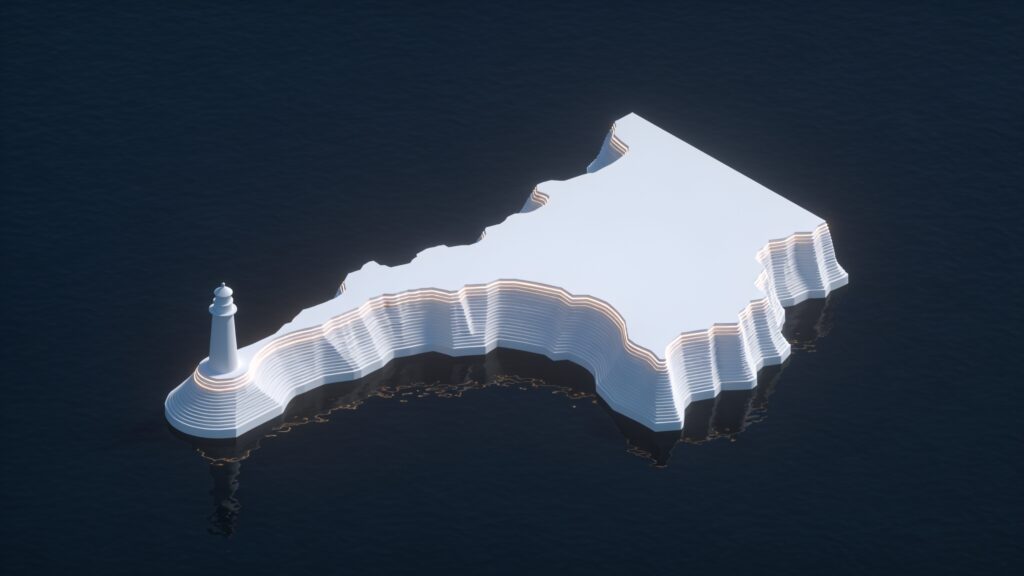
Cape Blanco State Park now protects the headland. The Cape Blanco Lighthouse, first lit in 1870, is the oldest standing lighthouse in Oregon and sits at an elevation of about 245 feet above sea level. The light is visible for roughly 26 miles offshore, which gives you a sense of how exposed and prominent this cape remains.
The whitish rock faces that earned the Spanish name are still there. Weather and wave action have shaped them further over four centuries, but the pale cliff faces are still part of what you see when you look at the headland from the beach below. The name describes something real and persistent about the place.
Key Takeaways
The name Cape Blanco has a clear, direct history.
- Spanish navigator Martin de Aguilar named the cape around 1603.
- “Blanco” means white in Spanish, referring to the light-colored rock faces visible from the sea.
- Spanish explorers applied this name to multiple pale headlands across the Americas.
- The name survived the transition to American settlement because it was accurate, well-charted, and geographically anchored.
- Cape Blanco is now the westernmost point in Oregon and home to the state’s oldest lighthouse.
Go See It for Yourself
If you want to understand why navigators spent four centuries trusting this particular name, stand on the beach below the headland on a clear morning and look up at the pale rock faces. The connection between what you see and what the name says is immediate. That directness is exactly what made the name useful to a sailor reading a chart in 1603, and it is what makes it satisfying to know today.
Cape Blanco earns its name every single day. That is worth knowing, and worth visiting.